
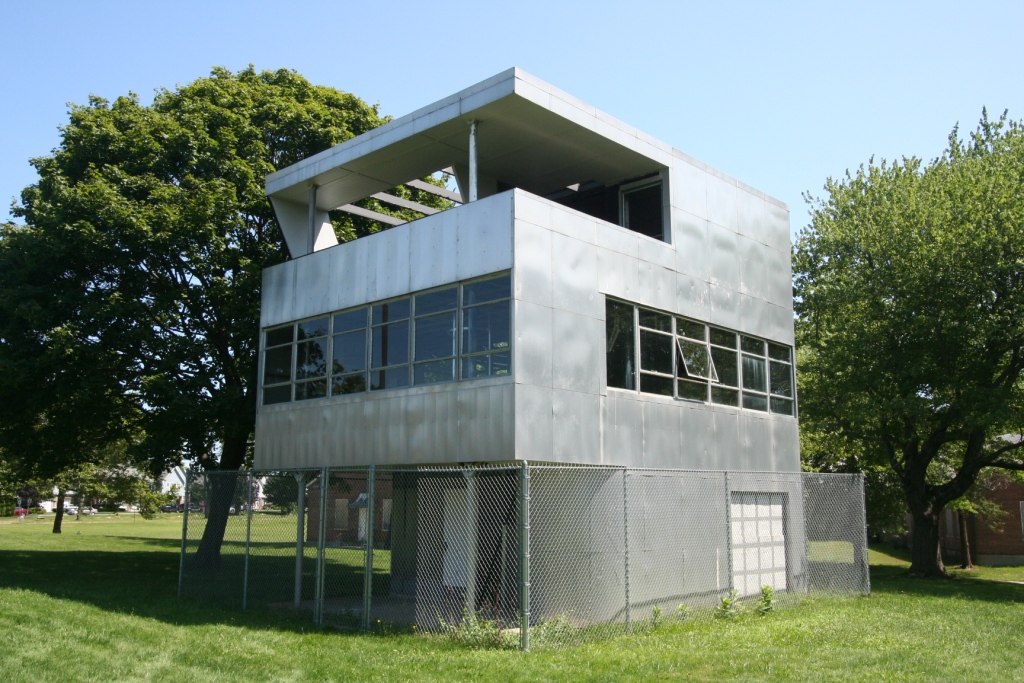
Aluminaire, NYIT, Central Islip, NY, Aug. 2009
The 1931 Aluminaire just can’t catch a break. It has been moved, and subsequently forgotten, not once, not twice, but thrice in its lifetime. Each time, after a brief flurry of excitement about this one-of-a-kind early American International-style house, it has faded back into obscurity, waiting to be rediscovered yet again.
Designed by architects A. Lawrence Kocher and Albert Frey for the 1931 Architectural League exhibition in New York, the Aluminaire was one of only two houses by American architects to be included in the Museum of Modern Art’s famed 1932 International Exhibition of Modern Architecture.
In the late 1980s, a grassroots campaign helped save the house from demolition, and the New York Institute of Technology got a grant to disassemble and move the house to their Central Islip, Long Island campus. Here’s a New York Times piece about the restoration project.
While conducting research back in 2007 for a grad school paper on twentieth-century American prefab homes, I was astonished to find very little about this house online. No contemporary photos anywhere, not even on Flickr, chock full of amateur architectural photographers, where I moderate a Twentieth-Century Prefab Homes group.
This summer I finally got a chance to trek out to Central Islip, Long Island, in hopes of tracking down the house on the campus of the New York Institute of Technology. With help from a campus security guard, I was thrilled to finally spot the elusive Aluminaire, the afternoon sun glinting off of its aluminum skin.
With this blog post, I’m hoping to spawn more discussion among architecture fans and historic preservationists about this modern prefab gem.
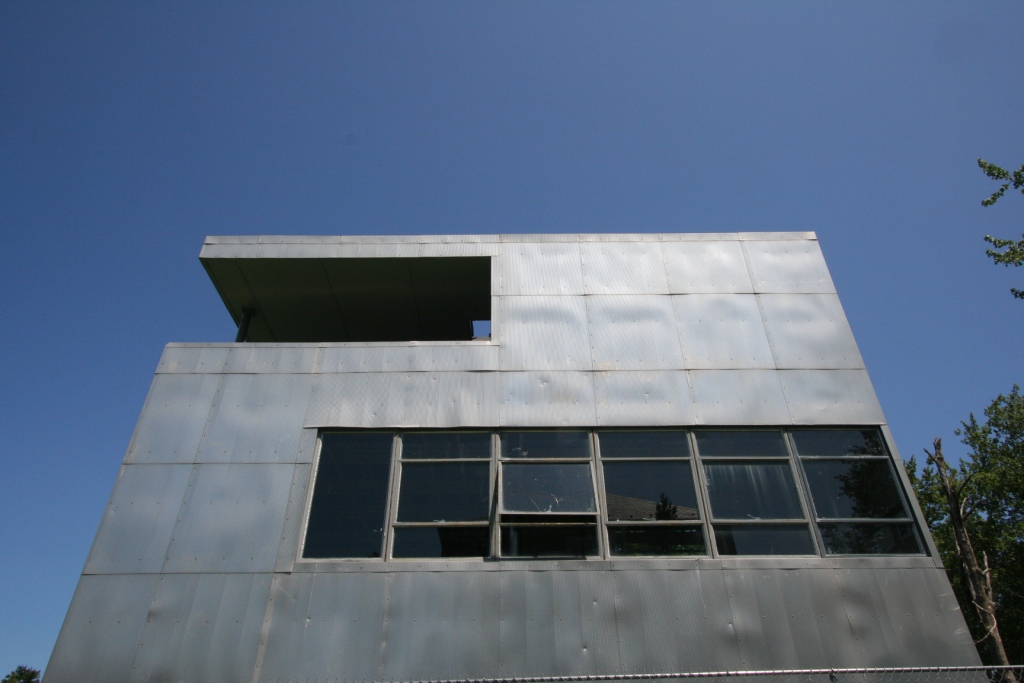
The Aluminaire was a one-off modern prefab house, assembled in less than ten days from standard industrial materials. The house was constructed of aluminum columns, steel beams, and pressed-steel subflooring, clad in ribbed aluminum panels with plastic and composite interior finish materials and early UV glass.
Frey and Kocher designed the Aluminaire as an acontextual exhibition house, independent from its site. The strikingly modern design was accompanied by a message — that well designed, affordable housing was made possible by Machine Age advances in technology and mass production.
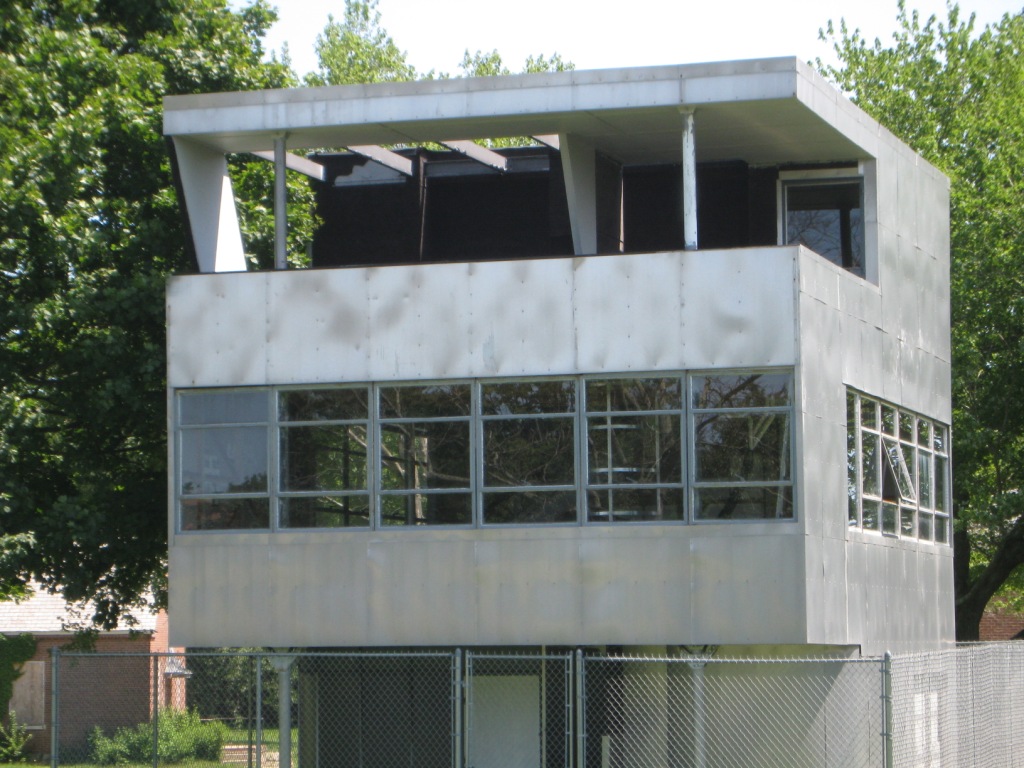
You can see the 1930s appearance of the Aluminaire here and a photo of the architects’ original scale model here.
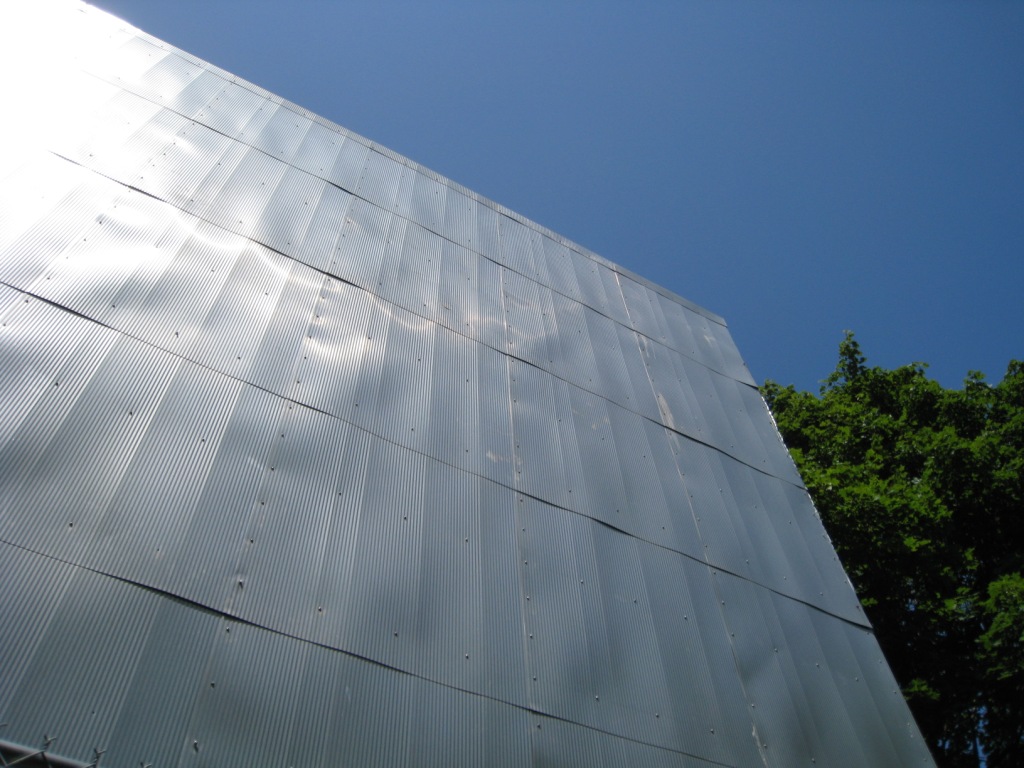
Replacement corrugated aluminum panels from the 199os restoration.
Original 4×5 ft. panels were dented & weathered.
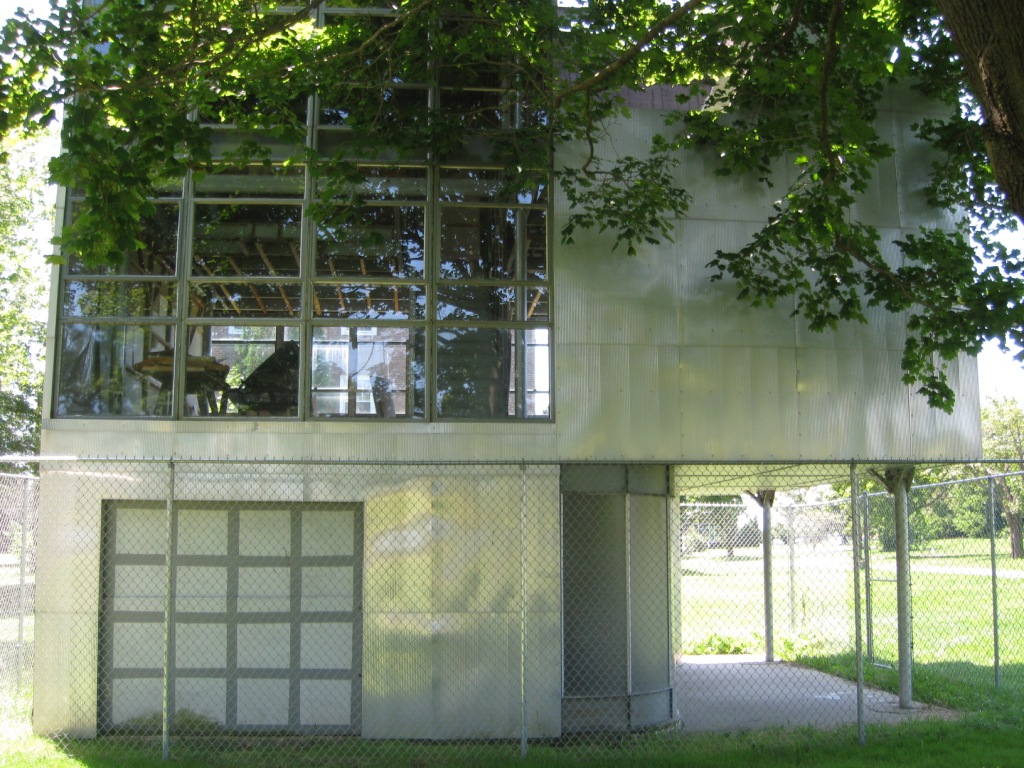
When the Aluminaire was first dismantled after the 1931 Architecture League show and moved to the buyer’s lot, the part numbers written in chalk on each building component were washed away in the rain.
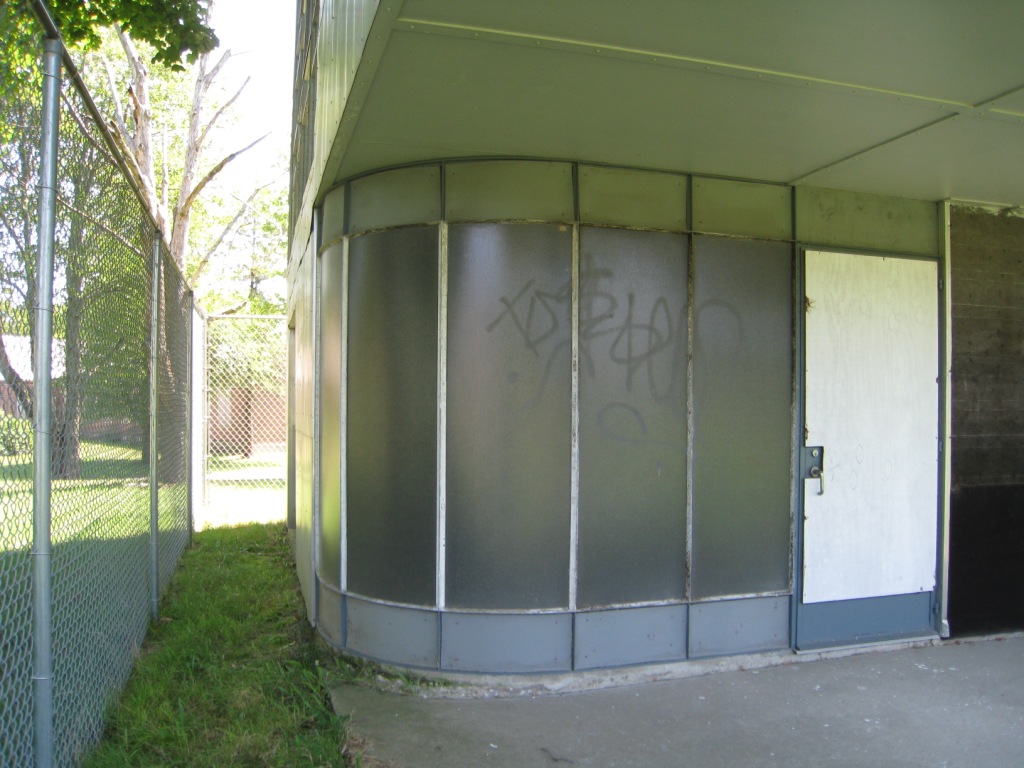 Signs of previous graffiti defacement explain the chain-link fence surround.
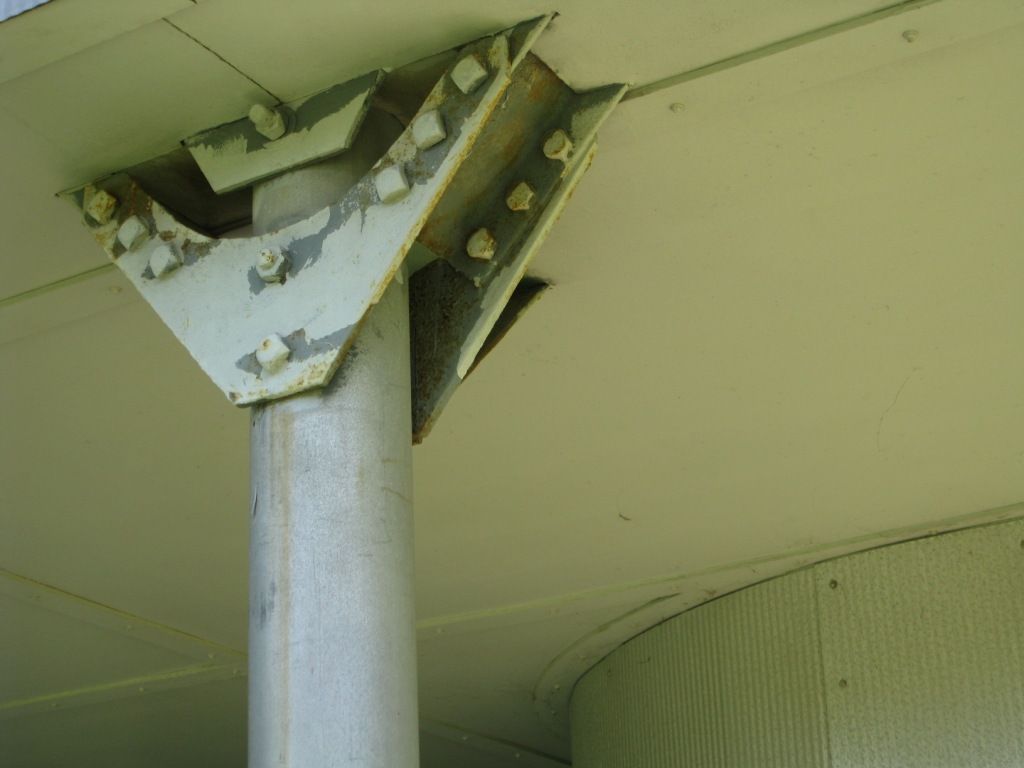
Aluminaire, steel support bracket
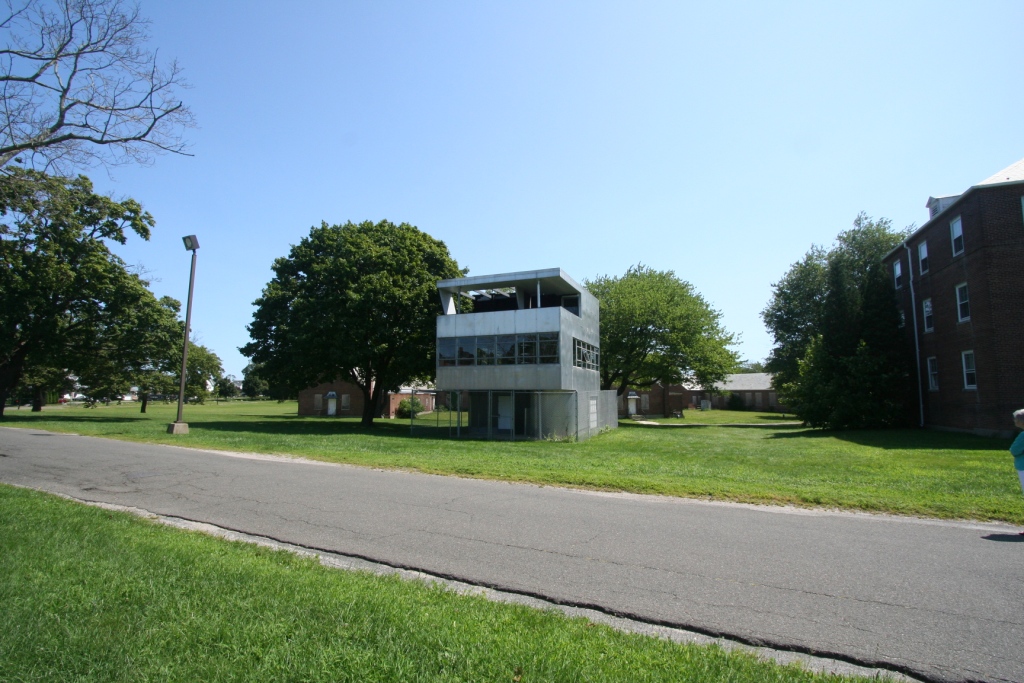
Buildings adjacent to the Aluminaire are boarded up and unused. NYIT has moved most of its programs to other campuses, including the Architecture & Planning department, stewards of the Aluminaire.
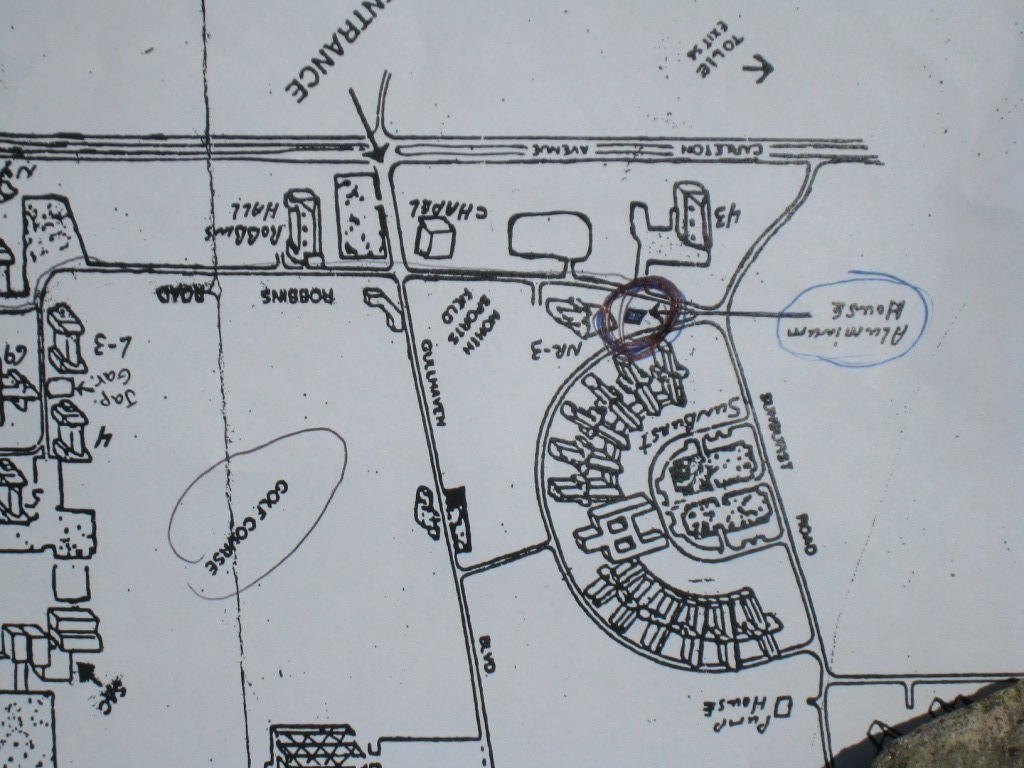
Map of NYIT’s Central Islip, Long Island, NY campus showing location of Aluminaire
Unfortunately, I wasn’t able to connect with Michael Schwarting, longtime Aluminaire restoration director, in time to arrange access to the inside of the structure. Schwarting is director of NYIT’s graduate program in Urban and Regional Design. During a previous chat with him about my thesis on postwar steel prefab Lustron Homes, he had indicated that with the transfer of his program to another NYIT campus, the future of the Aluminaire was yet again in question.

All Aluminaire images by Jennifer Sale Crane are licensed under a Creative Commons Attribution-Noncommercial 3.0 United States License. Based on a work at www.salecrane.com.
 Jennifer Sale Crane . architectural historian
Pingback: » Cool Modern Architecture images – Apartments for You